
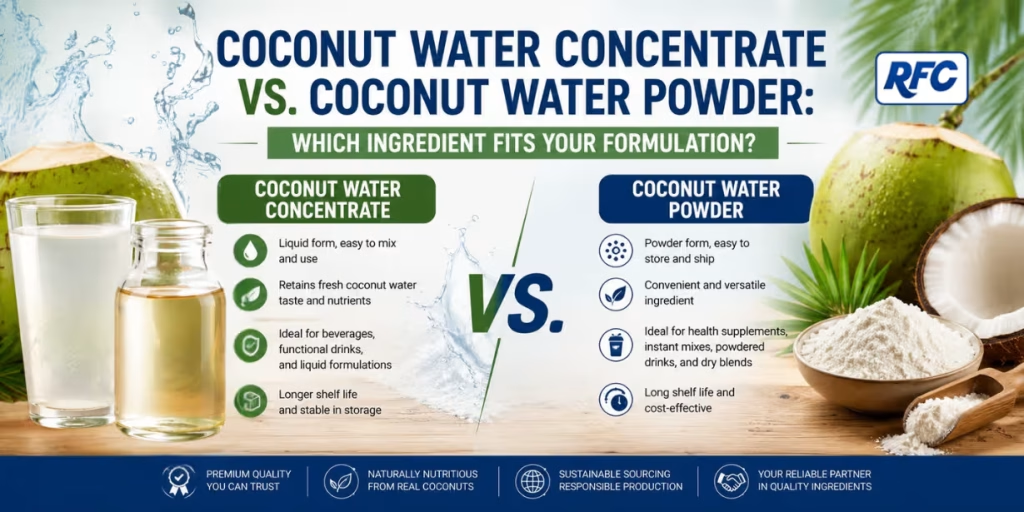
Which Ingredient Fits Your Formulation?
Product developers working with coconut-derived ingredients eventually face a practical question: should the formulation call for coconut water concentrate or coconut water powder? Both start from the same raw material, but the way each is processed changes how it behaves in a recipe, how it ships, and how it affects the finished product. Choosing the wrong format can mean added cost, a flavor that misses the mark, or logistics that complicate production.
Understanding how these two ingredients differ, and where each performs best, makes it easier to select the format that actually fits a product’s goals rather than defaulting to whichever one seems more familiar.
How Each Ingredient Is Made
Coconut water concentrate is produced by removing a portion of the water from fresh coconut water, typically through evaporation or reverse osmosis, while keeping the ingredient in liquid form. This method reduces volume for shipping and storage while preserving much of the natural composition of the original coconut water.
Coconut water powder, by contrast, is made by spray-drying or freeze-drying coconut water until only dry solids remain. Because pure coconut water contains relatively little solid matter, powder production often involves carrier agents such as maltodextrin to support the drying process and stabilize the final product.
Flavor and Sensory Differences
Because it remains a liquid throughout processing, coconut water concentrate generally retains more of the natural aroma, subtle sweetness, and mouthfeel that consumers associate with fresh coconut water. This makes it a strong choice for beverages where flavor authenticity matters.
Powder undergoes more processing steps and higher heat exposure in some drying methods, which can soften certain flavor notes and introduce a slightly different taste profile once reconstituted. Formulators working with powder often need to account for this shift when balancing a recipe.
Solubility, Handling, and Shelf Life
Coconut water concentrate is ready to incorporate directly into a liquid formulation, but it typically needs refrigeration, freezing, or aseptic packaging to maintain quality over time. Its handling requirements are similar to those of other liquid ingredients used in beverage production.
Coconut water powder offers a different advantage: it is shelf-stable at room temperature and simpler to store and transport. The tradeoff is that it must be reconstituted with water before use, which adds a processing step that liquid concentrate does not require.
Cost, Shipping, and Storage Considerations
Shipping costs are one of the more noticeable differences between the two formats. Because concentrate still contains water weight, freight and cold chain logistics add to its landed cost. Powder, being lightweight and shelf-stable, is often cheaper to ship and does not require temperature-controlled storage.
That said, the additional processing involved in drying can make powder more expensive on a per-unit basis. Buyers should weigh total landed cost, including freight, storage, and shelf life, rather than comparing raw ingredient prices alone.
Best Applications for Each Format
Coconut water concentrate tends to be the better fit for ready-to-drink beverages, blended juice products, and any application where a full, natural coconut flavor is a priority. Its liquid form also integrates smoothly into existing beverage production lines.
Coconut water powder is well suited to dry beverage mixes, nutritional supplements, bakery applications, and products that require long shelf life without refrigeration. It also offers flexibility for manufacturers producing in regions where cold chain infrastructure is limited.
Choosing the Right Format for Your Product
The right choice ultimately depends on the product itself. A beverage brand focused on a fresh, authentic taste profile will likely lean toward concentrate, while a company producing a shelf-stable powdered mix will find powder more practical. Distribution method, target shelf life, and budget all factor into the decision as much as flavor preference does.
Working with a coconut ingredient manufacturer that understands both formats helps take the guesswork out of this decision. Royce Food Corporation produces coconut water concentrate manufactured to consistent specifications, supported by documentation and technical guidance for buyers evaluating their formulation options.
Making an Informed Formulation Decision
Selecting between coconut water concentrate and coconut water powder is not simply a matter of preference. It affects flavor, shelf life, shipping cost, and how well an ingredient integrates into an existing production process. Taking the time to match the format to the product pays off in consistency and cost efficiency down the line.
Royce Food Corporation supports manufacturers with high-quality coconut water concentrate and the technical insight needed to determine whether it is the right fit for a given application. Reach out to our team to discuss your formulation needs, or visit our blog to learn more about coconut ingredients and how they are used across the food and beverage industry.